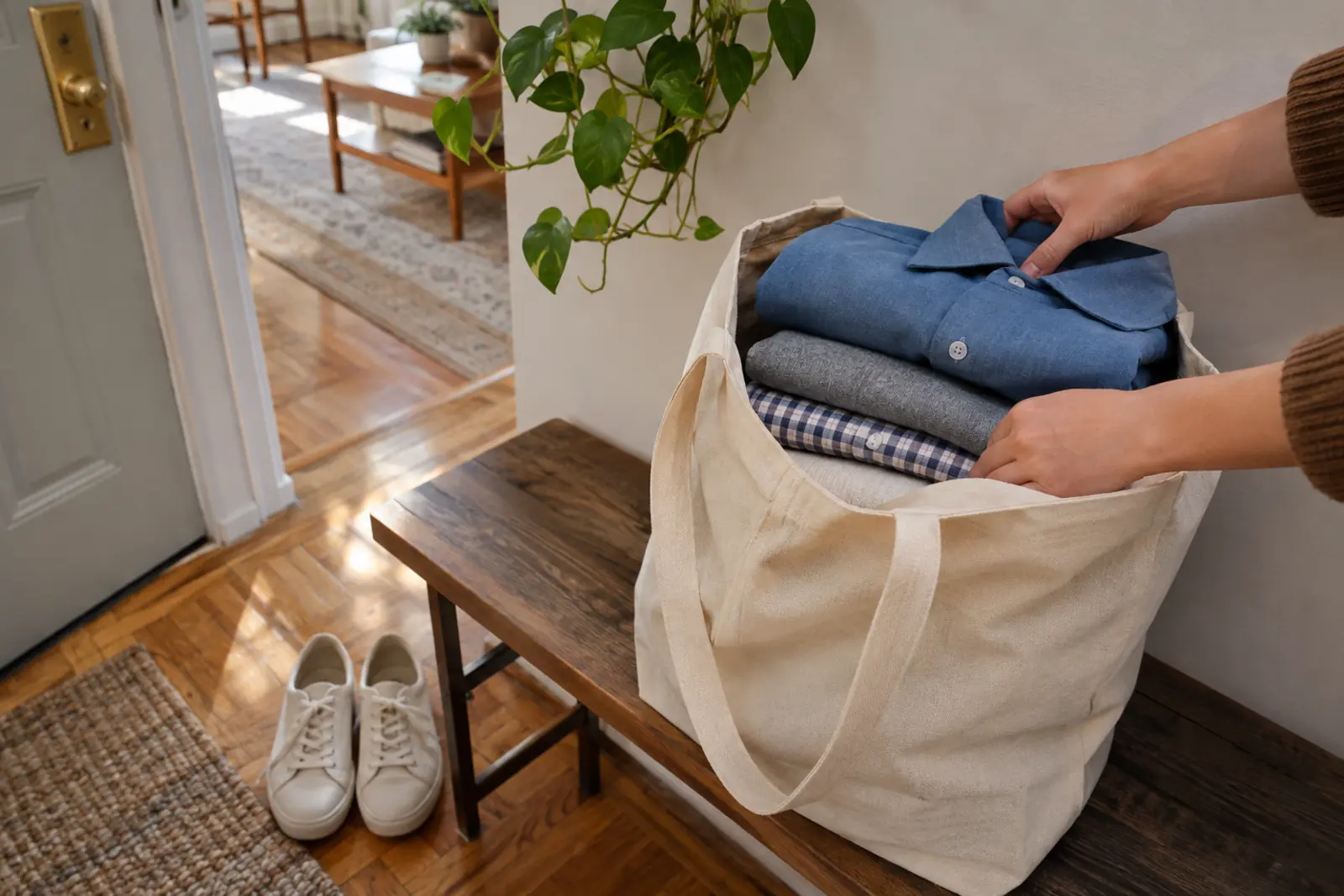
To donate clothes in NYC, you have three main routes: bring clean, bagged items to an organization found through DonateNYC, take them to one of DSNY’s five textile drop-off sites (open Thursday to Saturday), or use a DSNY Textile Recycling Collection bin if your building has one. Choose by condition: gently used clothing suits a donation organization, while DSNY’s textile program also accepts clean rags and ripped or damaged material. Clean and dry everything, bag it, pair shoes, and check the receiving organization’s acceptance list before carrying anything over. A bag beside a bin is still a bag somebody else has to deal with.
Start with condition and the receiving organization
Donation and textile collection serve different purposes. An organization seeking wearable clothing may have little use for torn fabric. A collection program that accepts damaged textiles has a broader intake list, but that does not mean every material belongs in its bin. Read the rules for the particular destination.
Sort before choosing where things will go. Separate clothing someone could wear as it stands from pieces needing repair and textiles too worn for reuse as clothing. Keep potentially collectible garments aside until you have examined them. Emptying a closet is easier when each bag has a destination.
| Option | Who it suits | What to check |
|---|---|---|
| Organization listed through DonateNYC | Residents giving away gently used clothing and other accepted goods | The organization’s current list, condition requirements, and handoff instructions |
| DSNY Textile Recycling Collection bin | People with access to a participating building’s collection | Accepted materials, bin instructions, and arrangements for collection |
| Selling through consignment or resale | People prepared to spend time finding a buyer | Acceptance standards, payment terms, fees, and what happens to unsold clothing |
| Regular trash for damaged clothing | Residents disposing of damaged clothing when another suitable route is unavailable | Current NYC311 guidance and whether a DSNY textile bin can accept the material |
Find a destination through DonateNYC
DonateNYC is a city service that lets residents search for organizations accepting gently used goods, including clothing. It provides a starting point, not a promise that every listed organization wants every item. The city’s clothing, household fabrics, and accessories guidance explains the donation route and points residents toward DonateNYC.
Check the organization’s own acceptance information before bringing a bag. Ask about the actual contents rather than simply saying “clothes.” Shoes, accessories, household textiles, and garments needing repair may have different rules. Confirm how to hand items over and whether an appointment is required. An unattended doorway is not a donation arrangement.
Donate clothes in NYC: drop-off sites
Besides organizations, DSNY itself runs textile drop-off bins at five sites, one in each borough. According to the city’s clothing guidance page, as read in November 2026, they are open Thursdays, Fridays, and Saturdays from 8:00 AM to 4:00 PM, and closed on legal holidays and during severe weather. Items must be clean, dry, odorless, and bagged.
- Manhattan: East Harlem, 2495 2nd Avenue
- Brooklyn: Bensonhurst, 1824 Shore Parkway
- Queens: Jamaica, 153-67 146th Avenue
- Bronx: Eastchester, 1635 East 233rd Street
- Staten Island: New Springville, 2500 Richmond Avenue
Hours and sites can change, so check the DSNY page before making the trip. Donating through these bins does not produce a tax deduction, according to the same page; if you need a receipt, use an organization that issues one.
Is there pick-up for donated clothes?
The DSNY pages read for this guide do not describe curbside pick-up of clothing for individual households. DSNY’s textile service is an in-building collection: a bin placed in an enrolled building and emptied when it is full. A household that cannot carry bags to a drop-off site should ask the organizations it finds through DonateNYC whether they offer pick-up, what they will take, and how to prepare the bags. Do not leave bags outside without a confirmed arrangement.
How DSNY textile bins work
The DSNY Textile Recycling Collection page, as read in November 2026, describes a free service for apartment buildings with 10 or more units, as well as office buildings, commercial businesses, schools, and nonprofit institutions. Eligibility belongs to the building or institution; it does not make every participating location a public drop-off point.
What the program accepts
DSNY lists clothing; accessories such as shoes, hats, bags, and gloves; household textiles such as towels, curtains, and bedding; clean rags; and ripped or damaged material. That last category matters. A garment can be unsuitable for a wearable-clothing donation yet still fit this program’s acceptance list.
How a building gets a bin
A building applies online. DSNY then visits to choose the number, size, and placement of bins, and the bin is emptied on request when it is full. The page describes a small bin (2 feet deep, 4 feet wide, 6 feet high) and a large bin (3.5 feet deep, 4 feet wide, 6 feet high). Ask building management about an existing collection or whether the building can apply. Follow the posted instructions, and report a full bin through the building’s arrangements.
The page names New York State Industries for the Disabled (NYSID) and Helpsy as the partners behind the service, with Helpsy delivering and emptying the bins. Partners can change, so read the DSNY page rather than relying on an old name or notice. DSNY told the City Council in 2024 that it was studying textile diversion for its solid waste management plan due in 2026. That planning statement does not establish what services operate now. Verify with DSNY for current program details.
Prepare clothing before it leaves home
- Keep it clean and dry. Check cuffs, pockets, linings, and storage folds before packing.
- Empty pockets. Remove personal papers and anything that is not part of the garment.
- Pair shoes. Keep matching shoes together and follow any packing instructions.
- Bag the contents. Use sound bags that keep everything contained and dry during the handoff.
- Separate different destinations. Keep wearable donations apart from damaged textiles intended for a collection that accepts them.
Do not donate wet or moldy items, items with strong odors, or recalled children’s items. Check the organization’s list for other exclusions. Washing something does not resolve a recall, and sealing a damp garment in a bag does not improve its prospects. A garment with a loose hem or broken zipper may be worth a look at the guide to tailoring and alterations before you decide it is only fit for a rag bin.
Damaged clothing needs a separate decision
NYC311 says damaged clothing can go in regular trash. DSNY’s textile collection program also accepts ripped or damaged material in its bins. These instructions describe different disposal routes: permission to discard a damaged garment does not mean a participating textile bin cannot accept it.
Check the DSNY page before packing damaged material. Do not assume that a donation organization accepts the same things as the textile program, or that “damaged” includes wet or moldy fabric. If the condition falls outside the published list, ask before bringing it.
Check pieces worth selling or examining
If payment matters, read the guide to thrift, consignment, and resale before giving clothing away. Selling involves acceptance decisions and terms; it also takes effort. Keep clothing intended for sale separate from bags already committed to donation.
An older garment deserves a look before being classified as worn out. The guide to judging vintage clothing explains how to assess a piece, while the guide to dating clothing labels helps with label clues. Age alone does not establish value or make a damaged piece collectible.
Can you deduct clothing donations on your taxes?
Donations to a qualifying organization may be deductible, but only if you itemize. The IRS charitable contributions topic page says you can generally deduct charitable contributions only if you itemize deductions on Schedule A (the rules for non-itemizers cover cash gifts, not clothing). For any contribution of $250 or more, cash or property, you must obtain and keep a written acknowledgment from the organization. Form 8283 is required when the deduction for noncash contributions is more than $500.
Ask the receiving organization for a receipt at the time of the handoff. Donations to DSNY’s drop-off sites are not tax deductible, and the DSNY textile program page does not describe receipts for building bins, so do not assume one. This is general information, not legal or tax advice.
Frequently Asked Questions
Where can I drop off used clothes in NYC?
You can use an organization found through DonateNYC, or one of DSNY’s five textile drop-off sites, open Thursday to Saturday from 8:00 AM to 4:00 PM as of November 2026. Items must be clean, dry, odorless, and bagged. Confirm hours on the DSNY page before you go.
Where can gently used clothing go?
Use DonateNYC to find organizations accepting gently used goods, then check the organization’s current list. Acceptance varies. Confirm that it wants the clothing and accessories you have, and follow its handoff instructions before bringing bags.
Can ripped clothing go in a textile bin?
DSNY’s Textile Recycling Collection accepts ripped or damaged material, along with clean rags and other listed textiles. Check the current DSNY page and the bin’s instructions. Do not assume a separate donation organization has the same acceptance rules.
Does DSNY pick up clothing donations from homes?
The DSNY pages read for this guide describe in-building bins for enrolled buildings and drop-off sites, not household pick-up. Ask individual organizations whether they offer pick-up.
How should clothing be packed?
Keep items clean, dry, and bagged. Empty pockets and pair shoes. Separate wearable clothing from damaged textiles going elsewhere. Exclude wet or moldy items, items with strong odors, and recalled children’s items, and check the organization’s list.
Is a clothing donation tax deductible?
Donations to a qualifying organization may be deductible if you itemize, and you need a written acknowledgment for contributions of $250 or more. Donations to DSNY’s drop-off sites are not tax deductible, and the DSNY page does not describe tax receipts for building bins. Ask the organization about a receipt and check IRS rules.