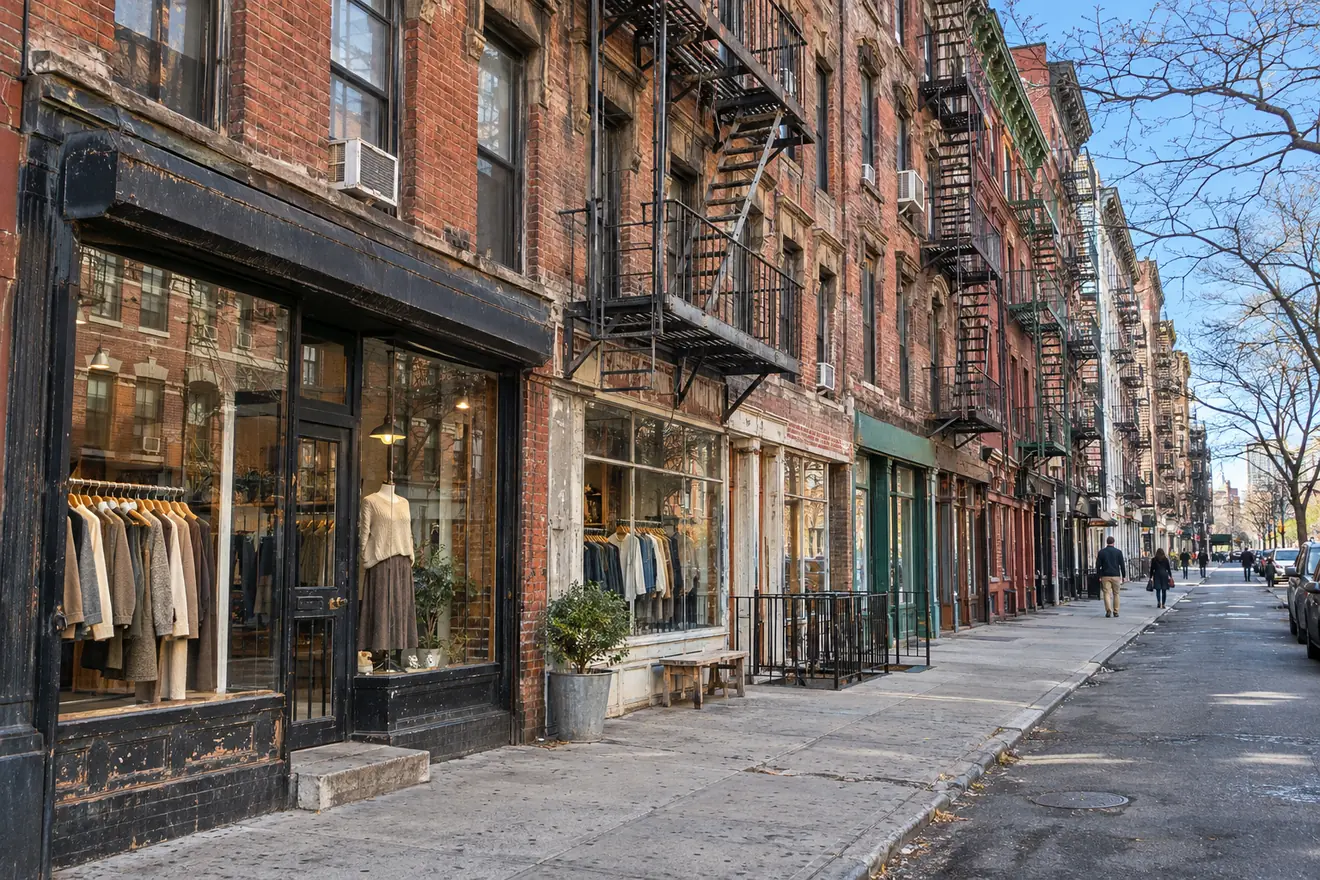
Lower East Side shopping is a walkable mix of small independent boutiques, vintage and resale, design studios, streetwear and a few long-standing family-run clothing and fabric stores, centered on Orchard, Ludlow, Rivington and Stanton Streets. It comes as scattered stops rather than one continuous retail strip. This guide explains the streets, the shop types and the practical checks that make a visit easier, without tying the neighborhood to a list of businesses.
Where is Lower East Side shopping? The main streets
Orchard Street is the historic spine. According to Wikipedia’s entry on the street, it runs eight blocks, from Division Street in the south to East Houston Street in the north, and is one-way for traffic heading north. The same source notes that above Rivington Street the street now leans toward boutiques and restaurants, while the blocks below Grand Street have changed more slowly. Use the streets as a loose framework: a promising window does not guarantee a useful size range, and a quiet block does not mean the shopping has ended. Ground-floor retail shares space with homes, workplaces and other uses. Look along side streets, but respect private entrances and do not assume an open doorway leads to a shop.
Orchard, Ludlow, Rivington and Stanton
Orchard and Ludlow give a shopping walk its main north–south shape; Rivington and Stanton provide useful east–west connections. Moving between them lets you compare different kinds of clothing retail without treating every window as a required stop. Look for the distinction between a shop selling finished garments, a resale business and a studio showing its own work. The questions worth asking change with the format.
Orchard Street has historically been closed to cars on Sundays between Delancey and Houston, and reference sources still describe that pattern, but arrangements have changed over the years. Check the Lower East Side Business Improvement District and NYC DOT for current street conditions. Do not plan around a guaranteed pedestrian-only street.
Allen, Essex, Delancey, Houston and Elizabeth
Allen and Essex are useful reference streets when moving through the area. Delancey and Houston help organize the walk, though crossing a major street can interrupt a leisurely browse. Elizabeth makes more sense when extending toward Nolita. Allow the route to bend around actual destinations rather than trying to cover every named street.
What counts as the Lower East Side?
The neighborhood has no single official outline. Wikipedia lists a core definition bounded roughly by East Houston, Essex, Canal, Eldridge, South and Grand Streets, plus the Bowery and East Broadway, and notes that other definitions run wider. For shopping, the practical zone is the part around Orchard, Ludlow and Essex. Grand Street, to the south, is described by the same source as a major Chinatown shopping street, a different kind of retail from the boutique blocks.
How the Lower East Side differs from Nolita
The Lower East Side rewards a visit that leaves room for mixed shop formats: older clothing businesses, resale, streetwear and studio retail can all enter the same afternoon. Nolita generally lends itself to a more concentrated boutique-shopping walk. Neither description predicts the contents of a particular storefront. The Nolita shopping guide explains that area’s street pattern and shopping character.
Decide which shopping task matters most. Comparing unfamiliar labels calls for browsing time. Examining vintage requires patience with construction and condition; the guide to vintage shopping on the Lower East Side goes deeper on judging pieces. Looking for fabric requires knowing what the eventual garment needs. Combining these is possible, but it helps to recognize when the task has changed.
Shop types: what to expect and what to ask
A storefront’s appearance tells you less than its selling terms. Ask how merchandise is sourced, whether the displayed garment is the sale item, and what happens if the fit is wrong. These questions are ordinary shopping business.
| Shop type | What to expect | What to ask |
|---|---|---|
| Small independent boutique | A selective assortment, sometimes with limited sizes or stock. | Is another size available? What is the return policy? |
| Vintage and resale | Previously owned clothing with varying condition, age and alteration history. | Are there repairs, replaced parts or condition issues? |
| Design studio | Work from a small production setting; public access may require an appointment. | Is this ready to purchase, a sample or an order? |
| Family-run clothing store | A business whose assortment may reflect a particular clothing specialty. | How does the sizing run? Are alterations offered separately? |
| Fabric store | Materials that need evaluating for a particular sewing project. | What is the fiber content, usable width and care requirement? |
| Streetwear shop | Casual clothing whose cut and proportions deserve a fitting-room check. | Can it be tried on? Are any purchases final sale? |
Inspect the garment, then consider the fit
Check seams, closures, lining and areas that take friction. With previously owned clothing, look inside as well as outside; repairs can be perfectly serviceable, but they should enter the decision. The guide to dating vintage clothing labels helps with reading RN numbers and tags. For fabric, ask about shrinkage and care before committing to a cut. For studio work, establish whether the price covers the finished garment and whether adjustments are included. Prices vary; ask for a written quote for custom work or alterations, and see the tailoring and alterations guide if a purchase will need fitting.
When to go and how to plan around uncertain hours
Weekday afternoons are generally calmer, while weekends tend to be busier. Shops may open in the late morning or around noon, and many close early on some days. There is no dependable neighborhood-wide schedule. Check each shop’s own website or social account before leaving, especially if a particular stop is the reason for the trip.
Evenings are a different neighborhood. Wikipedia notes that Orchard, Ludlow and Essex Streets between Rivington and Stanton are especially packed at night, so a daytime visit is the better fit for browsing and trying things on.
- Choose a main shopping purpose and leave room for detours.
- Check whether a studio welcomes walk-ins or requires an appointment.
- Bring measurements for clothing you cannot try on.
- Keep enough flexibility to skip a closed door without losing the afternoon.
The self-guided fashion walk provides a street sequence for combining the neighborhoods. Treat it as a framework, with current opening information deciding the actual stops. If your timing is flexible, the guide to NYC sample sales explains another way to shop in the city that depends on dates rather than storefronts.
Payment, returns and getting there
Carry a card and some cash, but ask which payment methods a seller accepts before committing. Do not assume a small business is cash-only or that every counter accepts every card. Keep receipts and confirm any final-sale terms before paying. For tax at the register, the under-$110 clothing tax rule explains how New York treats clothing purchases.
Stores must post their refund policy; the guide to store refund rules explains what to check. Verify current requirements with the NYC Department of Consumer and Worker Protection. This is general information, not legal or tax advice.
Getting there by subway
According to MTA line maps as of November 2026, subway options include Delancey St-Essex St for the F, J, M and rush-hour Z; Second Av for the F; and Grand St for the B and D. The MTA lists the Delancey St-Essex St station with entrances at Delancey and Essex Streets and at Delancey and Norfolk Street, and the 2 Av station with entrances along Houston Street, including at Allen Street. Verify service changes with the MTA line maps before traveling.
Stops worth adding to the trip
The Tenement Museum offers tours requiring advance reservations on Orchard Street; according to Wikipedia, the museum is at 97 Orchard Street and also uses the tenement at 103 Orchard Street. Verify tours with the museum and read the Lower East Side garment-trade history for context.
For a break between shops, the Essex Market at 88 Essex Street is a food market with more than 30 vendors. As of November 2026 its website lists hours of 8 AM to 8 PM Monday to Wednesday, 8 AM to 9 PM Thursday to Saturday, and 10 AM to 6 PM on Sunday, and notes that individual vendor hours may differ.
Frequently Asked Questions
Is the Lower East Side mainly for vintage shopping?
Vintage and resale are part of the mix, alongside small boutiques, streetwear, studios and long-standing clothing and fabric businesses. Decide what you want to examine before setting out; the neighborhood supports different shopping tasks, but they require different questions.
What is the main shopping street on the Lower East Side?
Orchard Street is the historic shopping street, running eight blocks from Division Street to East Houston Street. Ludlow, Rivington and Stanton Streets cross or run alongside it and make up the rest of the usual walking framework. Start on Orchard and let the other streets branch off from there.
When is the easiest time to browse?
Weekday afternoons are generally calmer than weekends. Opening patterns vary, and some shops close early on particular days. Check each intended stop’s own website or social account before traveling, then leave enough flexibility for an unexpected closure.
Is Orchard Street closed to cars on Sundays?
Reference sources describe a Sunday closure to vehicles between Delancey and Houston Streets, with stores putting racks outside. Because street programs change, confirm current conditions with NYC DOT or the Lower East Side Business Improvement District before building a plan around it.
Should I bring cash?
Some cash alongside a card gives you options, but payment acceptance varies by seller. Ask before committing to a purchase, especially when ordering studio work or having fabric cut. Keep the receipt and confirm the return terms at the counter.
Can I combine the Lower East Side and Nolita?
Yes. Elizabeth can form part of the extension toward Nolita, while Orchard and Ludlow help structure the Lower East Side portion. Keep the itinerary selective so that examining clothes, trying things on and asking questions do not become interruptions to a rigid route.