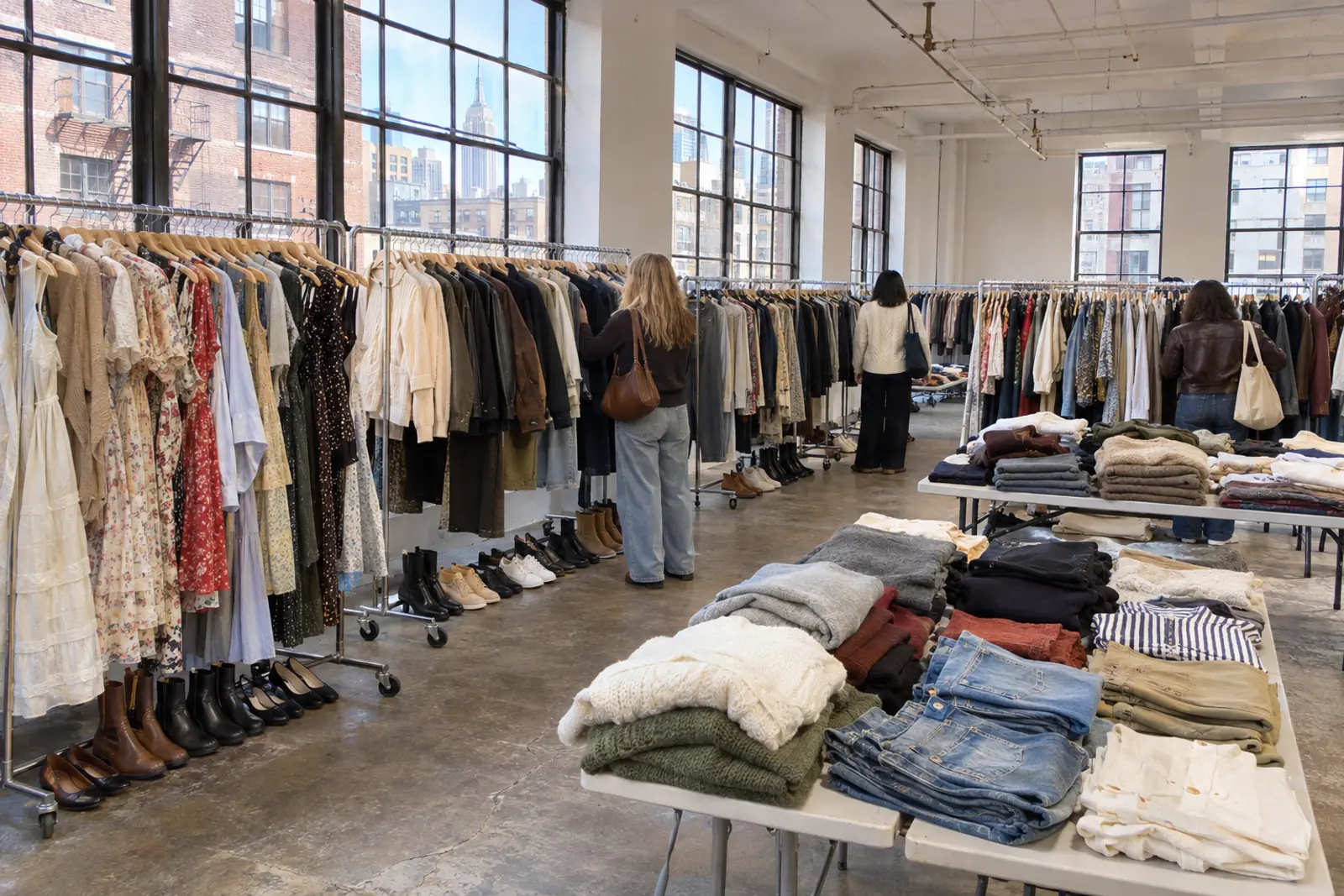
A sample sale is a temporary sale where a clothing label clears samples, overstock, prototypes or past-season stock, often in a showroom, studio or rented space; some happen online. The term describes the selling arrangement, not a guarantee of quality, fit or savings, so the way to shop one is to confirm it is real, inspect each piece, check the sale terms and compare the price with what the item would cost elsewhere.
Expect uneven size runs, conditions that differ from ordinary retail and stock that may include garments made for presentation rather than regular production. This guide explains what to check before committing to a purchase.
What is a sample sale?
Originally, samples were garments made for showings, fashion shows and presentations to buyers, which is why they tended to come in limited sizes and quantities. According to Wikipedia's overview of the term, modern sample sales are usually much larger and often include previous-season items, overstock, returns and goods never sold in stores. Many are in person; invite-only sample-sale websites emerged as an online version and usually run for 24 to 48 hours. Wikipedia also notes that shoppers are advised to check merchandise carefully because sample sales are final.
What is actually being sold?
A sample might have been made for a sales appointment, photography or development. Overstock is surplus merchandise; past-season stock is older inventory. A prototype may differ from the version eventually offered for sale. These categories can share a rack, and the sale title may not distinguish them. Ask which description applies to the garment in hand.
Inspect each piece on its own merits. Look for missing closures, loose seams, marks, uneven hems and signs of handling. Check whether a lining hangs properly and whether the garment has the labels needed to understand its care. A low price does not repair a strained seam.
How to find and confirm a sale
Start with the label’s own mailing list or social accounts. Treat third-party calendars as leads, then confirm the announcement directly with the label. A copied listing can survive a cancellation or omit restrictions.
Before leaving, check the location, access arrangements, payment methods, fitting-room setup and return conditions. If an appointment or identification is required, establish that beforehand. For online sales, confirm the seller through the label’s own channels before entering payment details.
- Check that the announcement comes from an account or website the label identifies as its own.
- Read the sale conditions, including exclusions and any restrictions on bags.
- Confirm the details again before traveling; an old announcement is not a current invitation.
- Save the announcement and purchase terms so there is a record of what was offered.
The Lower East Side shopping guide covers the area's shopping streets, but a sample sale can be held anywhere a label can rent a room, so the address on the label's own announcement is the one that counts.
Sample sale formats
| Sale type | What to expect | What to check |
|---|---|---|
| Showroom sale | Presentation samples and remaining stock in a space normally used for trade appointments. | Available sizes, access rules, fitting arrangements and whether pieces have been altered for display. |
| Studio sale | A sale in a working space, potentially mixing finished stock with development pieces. | Whether a garment is a prototype, whether it is complete and what care information is available. |
| Online sale | Purchases based on photographs, descriptions and measurements rather than an in-person inspection. | Seller identity, garment measurements, condition disclosures, shipping terms and return conditions. |
| Warehouse sale | Stock grouped in a storage or temporary selling space, with variable organization. | Size markings, garment condition, checkout terms and whether trying on is permitted. |
The setting tells only part of the story. A studio can sell ordinary surplus stock, while a warehouse can contain presentation samples. Ask about the merchandise rather than inferring its history from the room.
Are sample sales worth it?
Sometimes. A sample sale is worth it when you know the label, the garment passes inspection, it fits without alteration or with a simple one, and the price is clearly below what the same item costs at normal retail. It is not worth it when the sale is final, the stock is thin in your size, or the discount is only a claim on a sign.
- Compare before you go. Look up the label's current prices so a sale tag has something to be measured against.
- Count the full cost. Add any tailoring, cleaning or repair, plus the time spent queuing.
- Weigh the return terms. A final-sale purchase that turns out not to fit is a total loss, so the discount has to cover that risk.
- Prefer pieces you already wanted. A bargain on something you would not otherwise buy is still spending.
If the goal is a one-off piece rather than a particular label, the thrift versus consignment guide covers other ways to buy secondhand, and the guide to locally made clothing labels helps identify labels that may hold their own sales.
How to shop a sample sale: practical tips
- Confirm the sale with the label and note the dates, hours and entry rules.
- Arrive with a short list of garment types and sizes so you can scan racks quickly.
- Inspect before you queue: check seams, closures, linings and marks while the item is still in your hands.
- Try it on if the space allows, and move in it.
- Ask what the item is (sample, overstock, past season) and whether it has been altered or has known defects.
- Read the posted return terms before paying and keep the receipt.
- Check the receipt for tax treatment afterward.
What to bring and how to try things on
Pack for uncertain arrangements
Bring body measurements and, ideally, measurements from clothing that fits comfortably. Wear a light layer suitable for trying garments over if fitting rooms are shared or unavailable. Bring a bag, subject to the organizer’s rules, identification, a payment card and some cash as a backup. Confirm accepted payment methods; carrying alternatives does not mean every method will be accepted.
- Keep measurements somewhere easy to retrieve.
- Bring only what can be managed while examining clothes.
- Check bag and coat arrangements before entering.
- Keep payment and identification secure during shared fitting.
Check fit beyond the mirror
Fasten the garment, move your arms and sit or bend if the space permits. Look for pulling at closures and twisting seams. Limited sizes can encourage ambitious thinking about alterations. Before buying something that needs work, consult the guide to tailoring and alterations to understand what to ask a tailor. Prices vary; request a written quote before authorizing work.
Returns, posted policies and sales tax
Final sale and limited returns are conditions to check before paying. Ask whether any stated exception covers defects, and make sure the answer matches the written terms. Keep the receipt and any condition disclosure.
The NYC Department of Consumer and Worker Protection says businesses selling consumer goods must post a refund policy at each register, point of sale or entrance, listing every condition. If a store gives no refunds, its sign must say “No Refunds.” A temporary setup is no reason to leave the policy unclear. According to the same agency's shopping guidance, if no refund policy is posted, you can return an unused item within 30 days, and the business must give you the choice of cash or credit. Read the NYC store refund-policy rules before assuming that a verbal warning settles the matter.
According to the NYS Tax Department and NYC Department of Finance, clothing and footwear under $110 per item or pair are exempt from NYC and state sales tax; jewelry and watches are taxable. The clothing sales-tax guide explains the distinction. Check the receipt rather than assuming that everything on a sale table receives identical tax treatment.
Verify refund requirements with DCWP’s shopping guidance and tax treatment with the NYS Tax Department and NYC Department of Finance. This is general information, not legal or tax advice.
Etiquette and warning signs
Respect queues, fitting arrangements and instructions about handling stock. Return unwanted pieces to the designated place. Ask before photographing, and keep shared fitting space usable. Inspect carefully without stretching necklines, forcing closures or leaving makeup on fabric.
Be wary of a supposed sample sale that appears to resell unrelated cheap goods without a clear connection to the advertised label. Missing labels alone do not establish fraud, but vague answers about origin deserve attention. Pressure to pay by transfer or gift card, an unconfirmed seller and no posted refund policy are reasons to stop. Urgency is a selling technique, not evidence.
Frequently Asked Questions
What is a sample sale?
It is a temporary sale in which a label sells samples, overstock, prototypes or past-season stock, usually in a showroom, studio, rented space or online. The name describes how the goods are sold, not their quality. They are often final sale, so read the terms before paying.
Are all sample sale garments actual samples?
No. A sale can include overstock, past-season merchandise, prototypes and presentation samples together. Ask what the particular garment is, whether it has been altered and whether any defects are known. The event’s name does not establish the history of everything offered.
Can I expect a fitting room?
Check before going. Fitting rooms may be shared, restricted or unavailable, and trying on over clothing may be the practical option. Bring measurements and wear a suitable layer. If the arrangement prevents a useful fit check, take that uncertainty seriously before paying.
Does final sale mean the refund policy can be left unstated?
No. DCWP says businesses selling consumer goods must display their refund conditions, and a store offering no refunds must post “No Refunds.” Read the policy before purchase, retain proof of purchase and verify current requirements with DCWP if a dispute arises.
Is a garment worth buying if it needs alterations?
That depends on the garment’s construction, condition and fit. A straightforward adjustment and a structural change are different jobs. Ask a tailor what is feasible and request a written quote. Treat an unassessed alteration as an unresolved cost, not an automatic solution.