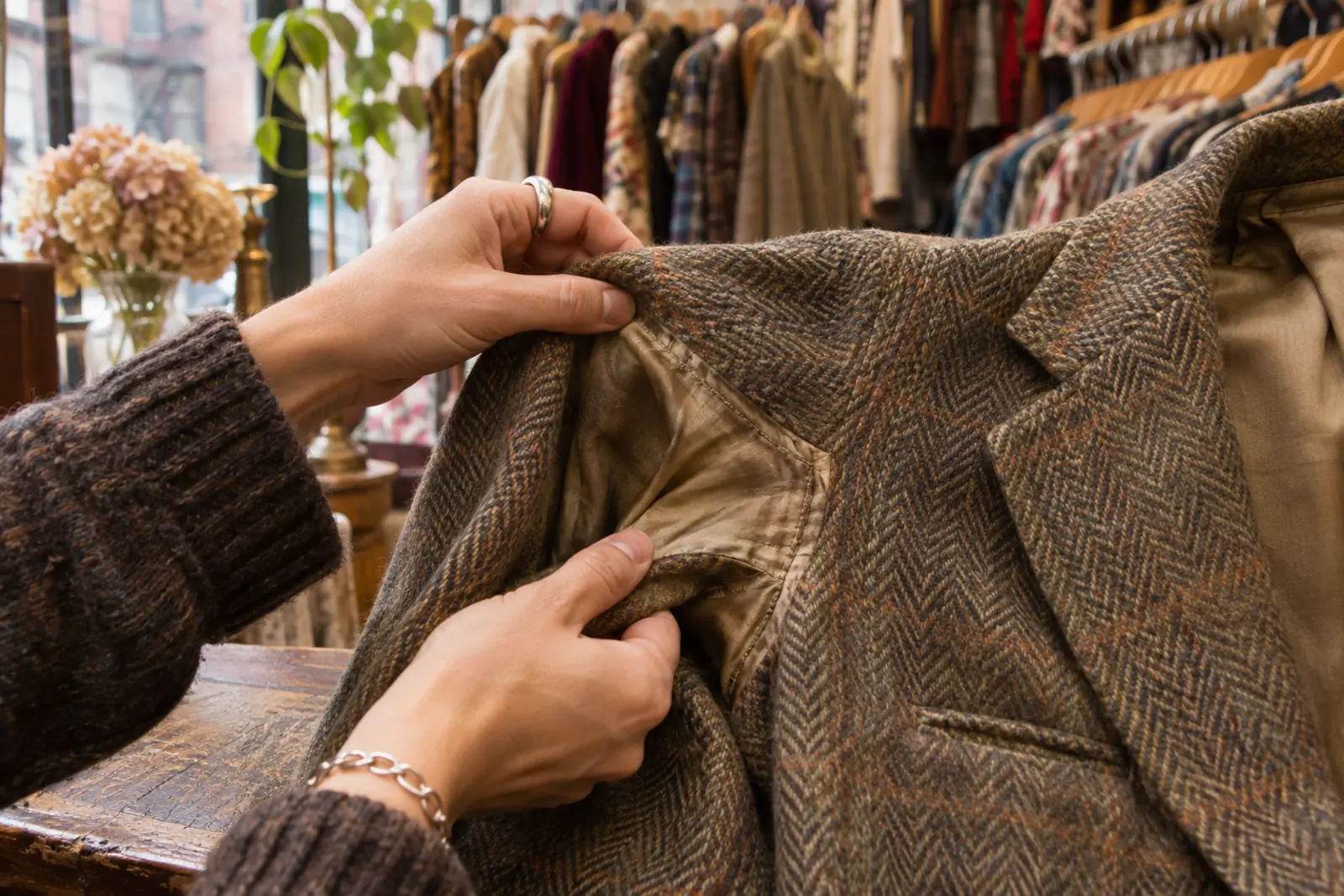
Good vintage shopping on the Lower East Side starts with the garment: its age, condition, fit and ability to survive another stretch of wear. The Vintage Fashion Guild’s Code of Practice, as of 2026, sets a threshold of at least twenty years for items its members sell. Age alone does not make something desirable, rare or wearable. Check the cloth before admiring the label, and decide what repairs you can realistically take on before paying.
Vintage, secondhand, retro and reproduction
Secondhand describes previous ownership, not age. A recently purchased jacket can be secondhand without being vintage. Retro describes a look borrowed from the past; the garment itself may be new. A reproduction is a newly made version of an older design. Those distinctions matter when a price depends on a claim about age or authenticity.
Ask what supports the dating: construction, labels, fabric, fastenings or documented history. A silhouette suggests a period but does not establish it. Fashion has a long habit of repeating itself, occasionally with less convincing buttons.
Where to look around the neighborhood
Vintage can turn up in small resale and vintage shops, appointment studios and temporary pop-up racks. Around Orchard Street and neighboring Lower East Side streets, judge each selection on its own terms. A tidy display does not establish condition, and a crowded rail does not establish value.
Check access arrangements before setting out for an appointment studio or temporary sale. Ask whether trying on is possible, whether measurements are available and whether flaws are described. Stock and arrangements change; a neighborhood walk is useful, but it cannot guarantee a particular garment.
Inspect before you commit
Examine the garment in good light, with permission to turn it inside out. Handle fragile fabric gently. Look across the whole piece, then inspect the areas that take strain or collect perspiration. Use this checklist before the fitting-room excitement makes every defect seem manageable.
| Area | What to check | Red flag |
|---|---|---|
| Seams | Look along stitching and gently examine stressed areas. | Fabric pulling apart beside the stitches. |
| Armpits | Check discoloration, stiffness and thinning inside and out. | Brittle cloth or damage extending beyond a stain. |
| Lining | Inspect movement areas, hems and attachment points. | Widespread shredding or a lining that restricts movement. |
| Zippers | Ask to operate the zipper without forcing it. | Missing teeth, torn tape or repeated separation. |
| Odor | Notice the garment’s smell, including inside pockets. | Persistent mustiness or heavy fragrance masking another smell. |
| Moth holes | Examine wool and folds against the light. | Scattered holes, thinning patches or possible pest activity. |
| Fiber labels | Read available composition and care information. | A description that conflicts with the label or construction. |
| Closures | Check buttons, hooks, snaps and surrounding fabric. | Missing distinctive parts or cloth tearing at attachment points. |
| Stains | Inspect collars, cuffs, hems and concealed folds. | Set discoloration accompanied by weakened fabric. |
| Repairs | Look for patches, darns, replaced panels and altered seams. | Repairs that create strain or conceal spreading damage. |
Separate a repair from a gamble
A loose button and deteriorating cloth are different commitments. Missing stitching may be repairable; fabric that breaks under ordinary handling presents a larger problem. Do not assume cleaning will remove an unknown stain or odor. Ask what treatment has already been attempted, and treat an uncertain answer as uncertainty.
Fit the garment you have
Do not trust the size on the tag. Sizing changed over time, and previous alterations may have changed the garment again. Measure it flat without stretching: across the chest or bust, waist and hips, then along relevant lengths. Compare those measurements with your own measurements, allowing room for movement, and with a similar garment that fits comfortably.
- Ask how measurements were taken, especially around curved seams or elastic.
- Try sitting, reaching and walking when the garment’s condition permits.
- Check shoulders, armholes, rise and sleeve movement, not just the waist.
- Look for available seam allowance before assuming something can be let out.
A flat width is not automatically a usable body measurement. Cut, lining, stretch and intended ease affect fit. If the fabric strains while standing still, optimism will not improve it on the stairs.
Understand the asking price
Condition, maker, era, construction and alterability can all affect an asking price. So can an unusual fabric or a complete set of original details. A recognizable label does not cancel damage, and an unfamiliar maker does not cancel excellent workmanship.
Think about the finished cost of wearing the piece: purchase, cleaning and necessary repairs. Prices vary. Ask for a written quote for alteration work before committing to a garment whose usefulness depends on it. A bargain becomes less persuasive when the required work remains undefined.
Check the age claim
Labels are evidence, not a verdict. They can survive alterations, move between garments or belong to a later repair. Use the guide to dating vintage clothing labels to build a case from several clues. Ask which details support the stated era and which remain uncertain.
Ask about returns before paying
Many vintage sales are final. Ask whether a return is possible, whether the remedy is money back or credit, and what conditions apply. Get the answer before payment and keep the receipt and any written condition description.
According to the NYC Department of Consumer and Worker Protection, a store must post its refund policy, and a store giving no refunds must post “No Refunds.” Read the guide to NYC store refund policy rules for context.
Verify with the NYC Department of Consumer and Worker Protection for current refund requirements. This is general information, not legal or tax advice.
Plan repairs and care
Before buying for alteration, consult the guide to tailoring and alterations. Changing a hem can be straightforward; changing shoulders, proportions or fragile embellished areas may be much less so.
Old fabric deserves a cautious start. Read surviving care instructions, disclose weak areas to a cleaner and avoid experimenting with heat or aggressive stain treatment. Support heavy pieces during storage and keep garments clean and dry. If composition or stability is uncertain, ask a cleaner experienced with older textiles before washing.
Frequently Asked Questions
Does secondhand always mean vintage?
No. Secondhand means previously owned. Vintage describes age, while retro describes a style associated with the past. A reproduction can closely resemble an older garment while being newly made. Ask what evidence supports an age claim.
Should I buy something with moth holes?
Only if the damage and possible repair suit your plans. Inspect beyond the obvious holes for thinning and further damage. If there are signs of active pests, avoid bringing the garment into your wardrobe until the issue has been assessed.
Can a tailor make any vintage garment fit?
No. Available fabric, construction and condition limit alterations. Enlarging a garment may require seam allowance that is absent, while major reshaping can disturb its proportions. Ask a tailor to assess the actual piece before purchasing it for substantial work.
Will cleaning remove an old smell or stain?
It might, but removal is uncertain. Previous treatment, fabric composition and deterioration all affect the result. Do not buy on the assumption that cleaning will solve the problem. Ask about earlier attempts and seek an assessment before further treatment.