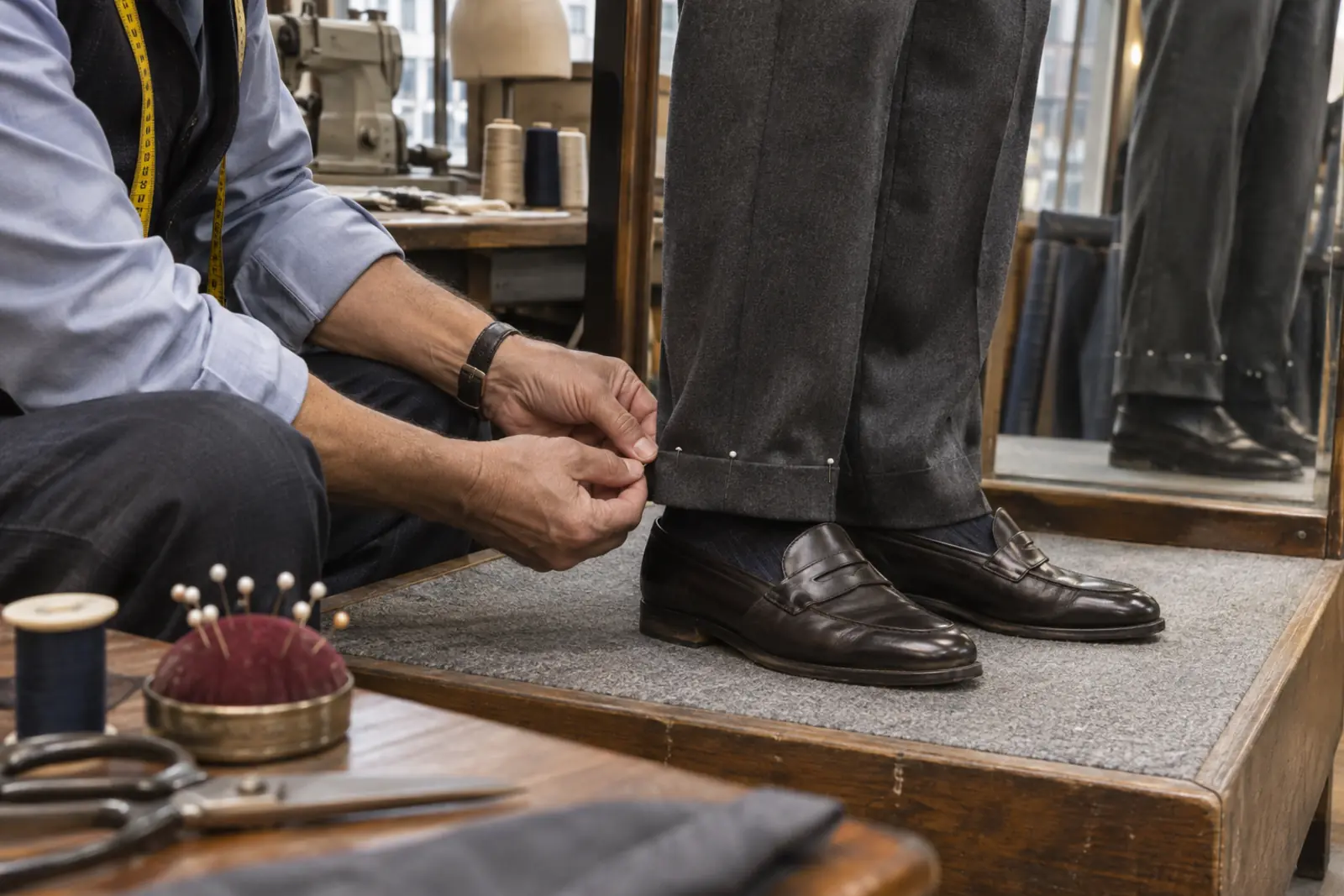
Hems, modest waist adjustments and some sleeve changes are usually possible at a New York tailor; rebuilding shoulders or making a garment larger is much less predictable. What matters is the fabric, the construction and how much material remains inside the seams. Before leaving anything, agree on the work, get a written quote and establish what happens if the finished fit needs correcting. A low purchase price does not make a difficult alteration simple.
What can a tailor change?
Difficulty depends on the garment in front of the tailor. An unlined skirt and a lined coat may need the same change in length but very different work. Ask to see what limits the alteration before deciding whether to proceed.
| Alteration | Difficulty in general terms | What limits it |
|---|---|---|
| Hems | Simple; moderate with special finishes | Fabric, lining, pleats, curved edges and original hem details. Lengthening depends on fabric left inside the hem. |
| Waist adjustment | Moderate | Seam allowance, waistband construction, pockets and closures. A large change can disturb the garment’s proportions. |
| Sleeve length | Simple to complex | Cuffs, working buttonholes, trim, lining and sleeve shape. Shortening at the shoulder involves more structure. |
| Taking in sides | Moderate | Seam allowance, fabric, pockets, armholes and pattern placement. Taking in too much can pull adjoining sections out of position. |
| Shoulders | Complex | Internal structure, sleeve attachment, padding and overall balance. Changing the shoulder can affect the entire upper garment. |
| Lining repair | Moderate; complex when extensive | Fabric condition, access to seams and whether the lining can hold stitches. Widespread damage may require replacement. |
| Zipper replacement | Moderate; complex in structured garments | Fabric strength, lining, placement and the construction surrounding the opening. |
| Letting out | Moderate to complex | Available seam allowance, fabric condition, old stitch marks and fading. Some garments have no usable extra material. |
Smaller is not automatically easier
Taking in a garment changes the relationship between its parts. Pockets can drift toward the sides; an armhole can become uncomfortable; a jacket can close neatly while pulling across the back. Ask what the proposed change will do to the whole garment, then test movement while it is pinned.
How to get pants hemmed: decide these things first
Hemming trousers is usually a simple job, provided you settle a few choices before the tailor pins anything. Wear the shoes you will actually wear with the pants, stand naturally, and say how much of the shoe the hem should cover.
- Break: Decide whether the hem should rest on the shoe with a fold in the fabric, touch it lightly or stop above it. The right choice depends on the cut and your shoes, so show the tailor the pair you chose.
- Plain hem or cuff: A cuff turns the fabric up and needs more length than a plain hem. Ask which suits the weight of the fabric and the style of the pants.
- Original hem: On jeans and some vintage trousers, the factory hem and its wear pattern are part of the look. Ask whether the tailor can keep the original hem edge when shortening, and expect that this is a different job from a plain new hem.
- Leg shape: On tapered or narrow legs, shortening moves the hem to a wider part of the leg, so the opening grows. Ask whether the leg opening will change and whether it matters to you.
- Back versus front: Check the hem from the side and the back in the mirror, not only from the front, since the length can look different from each angle.
Lengthening pants works only if enough fabric was folded into the old hem, and old hem lines or fading can remain visible. Ask the tailor to check the allowance before you commit.
What to bring to a fitting
Bring the shoes you intend to wear, especially for trousers, long skirts and dresses. Wear the undergarments and layers that affect the fit. Explain how the garment needs to function: sitting at a desk, walking comfortably or wearing a jacket over a shirt.
- Bring a clear idea of the fit, including what currently feels wrong.
- Point out pulling, slipping, restricted movement and uneven hems.
- Mention details you want preserved, such as original stitching or a cuff.
- Empty pockets and tell the tailor about previous repairs or alterations.
Stand naturally. Holding your breath and straightening into an unfamiliar posture produces a fitting for somebody you briefly pretended to be. Sit, reach and walk when asked, and speak up if the pinned garment already feels restrictive.
How to choose a tailor in New York
New York has tailors and alteration shops in nearly every neighborhood, from small counters inside dry cleaners to specialist workrooms. Which kind you need depends on the garment. A plain hem on everyday trousers is routine work almost anywhere; a structured jacket, a bias-cut dress or a fragile vintage piece calls for someone who regularly handles that kind of garment.
- Look at their work: Ask to see a garment that has already been altered, or look at the hems and seams on the tailor’s own clothes.
- Describe the garment honestly: Mention fabric, age and anything that worries you. A good tailor will say plainly what is risky or not worth doing.
- Ask about the type of work they do most: Suits, bridal, denim, delicate fabrics and leather are different skills.
- Compare quotes on the same description: Prices vary by shop, garment and job, so compare written quotes for identical work rather than headline prices.
- Check the shop’s terms: Ask about the pickup deadline, rush work and how corrections are handled before you hand over the garment.
If you buy on the Lower East Side and expect to alter the piece, the Lower East Side shopping guide shows how the area’s shop types differ, which helps you judge how much fit work a purchase may need.
Agree on the work before leaving the garment
A useful written quote describes the alteration, not merely “adjust fit.” Prices vary; ask for a written quote after the tailor has examined the garment. If opening a seam could reveal additional work, establish how approval for that work will be handled.
- Scope: Which seams, hems, closures or lining sections will change?
- Cost: Does the quoted price include pressing, materials and any further fitting?
- Completion: What is the agreed date ready, and how will readiness be confirmed?
- Corrections: What happens if the garment does not fit afterward, and could further work cost extra?
- Collection: Is there a pickup deadline, and what happens after it?
Keep the receipt and written agreement. Ask whether another fitting is needed before the work is finished. At collection, try the garment on before leaving if possible. Check the agreed changes and move normally; a neat seam does not tell you whether trousers are comfortable when seated.
Tailor for vintage clothing: what needs a closer examination
Old fabric can be fragile even when its surface looks sound. Linings may tear around stressed seams, and silk can shatter: the material itself breaks down rather than simply developing a repairable split. Fresh stitching cannot restore strength to fabric that is failing around it.
Ask whether the tailor handles delicate fabric and whether the proposed work could expose weak areas. Previous alterations may have left small seam allowances. Old creases, fading or stitch holes can remain visible after letting out. The guide to judging vintage clothing explains what to inspect before buying, and the guide to dating vintage clothing from its labels helps you identify the era, which in turn hints at the fabrics and construction a tailor will meet.
Decide what is worth preserving
Original hems, labels, trim and unusual construction may be part of the garment’s appeal. Say which details matter before cutting begins. Ask whether a less invasive adjustment is possible, and accept that leaving a piece unchanged may be the better choice.
Buy with the alteration in mind
Judge the garment as it is before imagining the finished version. Check shoulders, armholes, rise and overall balance. A manageable hem is a different proposition from a jacket that needs reshaping throughout. If the purchase only works after an uncertain alteration, the uncertainty belongs in the buying decision.
At a final sale, you own the fit risk. Read the sample sale guide before treating an awkward fit as an easy project. The same caution applies when comparing thrift, consignment and resale: an appealing find still needs enough sound fabric to support the intended work. Store return rules differ from shop to shop; the guide to store refund policies in New York City explains what to check before you buy something you may need to alter.
Allow room before an event
Tell the tailor the event date before agreeing to the job. Distinguish that date from the date you need to collect and try on the garment. Leave room for another fitting or correction, and ask what happens if completion is delayed. Keep an alternative outfit available when the deadline matters.
Tax and problems with the finished work
The NYS Department of Taxation and Finance identifies a clothing exemption for qualifying items under $110; check the current rule in the clothing sales tax guide. Whether a tailoring service is taxable is a separate question. The department says fabric, thread, buttons and zippers used to repair clothing are generally exempt unless made of precious materials; that guidance does not address tailoring services. The department’s clothing and footwear bulletin covers materials that become part of the clothing and does not say whether a labor charge is taxed. Verify with the NYS Department of Taxation and Finance. This is general information, not legal or tax advice.
If a job goes wrong, photograph the problem and compare it with the written agreement. Explain the discrepancy and request a specific remedy in writing. Keep receipts and correspondence. The NYC Department of Consumer and Worker Protection handles consumer complaints about businesses in New York City. Its online complaint form asks for supporting documents such as receipts and contracts, does not require an account, and uses mediation to try to resolve complaints, according to the agency. Verify the current process on the agency’s site before filing.
Frequently Asked Questions
Can a tailor make clothing larger?
Sometimes, if there is usable fabric inside the seams or hem. Ask the tailor to inspect the allowance and explain where old stitching, fading or creases might show. Extra material alone does not guarantee a satisfactory result.
Are shoulder alterations worth attempting?
They can be possible, but shoulders involve the garment’s structure and sleeve attachment. Ask what else must change and how predictable the result is. Get a written quote before deciding whether the garment justifies the work.
Should vintage lining always be replaced?
No. A local tear may be repairable if the surrounding material remains strong. Widespread weakness calls for a different assessment. Ask whether a repair will hold and whether replacing the lining could put stress on fragile outer fabric.
What if the finished garment still fits badly?
Describe the problem promptly and refer to the agreed work. Keep photographs, the receipt and written messages. Ask what correction is proposed and whether there is an additional charge before authorizing more work.
How should I get pants hemmed so they fit with my shoes?
Bring and wear the shoes you will use with the pants, stand naturally and tell the tailor how the hem should sit on the shoe. Decide between a plain hem and a cuff, and ask whether the leg opening will change if the leg is tapered. Check the hem from the side and back before you leave.
How much do tailor alterations cost in NYC?
Prices vary: cost depends on the shop, the garment, the fabric and the amount of work, and this guide gives no figures. A simple hem is generally a smaller job than reshaping a lined jacket. Ask for a written quote after the tailor has examined the garment, and compare quotes for the same described work.
Do I pay sales tax on clothing alterations in New York?
The state tax department treats materials used to repair clothing, such as thread and zippers, as generally exempt, but its clothing bulletin does not say whether a tailor’s labor charge is taxed. Ask the shop how the tax is shown on your receipt, and confirm with the NYS Department of Taxation and Finance if it matters.